



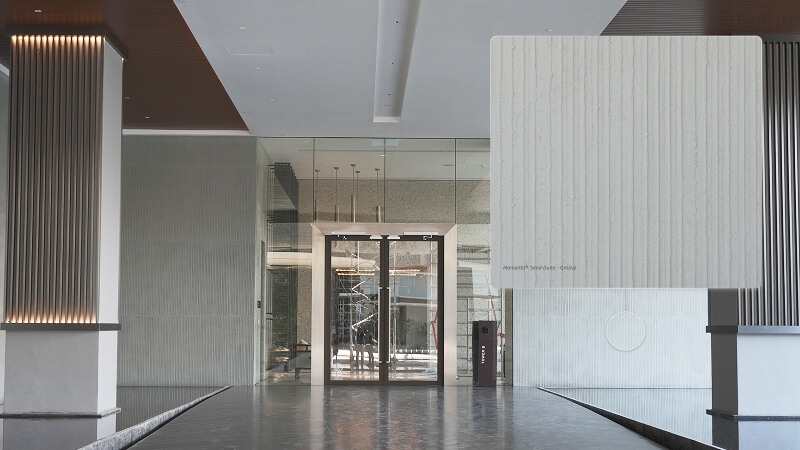
A lobby begins shaping perception before residents or visitors move deeper into a development.
At Jendela Residences, the arrival experience is strengthened by a feature wall finished with Nippon Paint Momento® Sand Dune. What began as a plain wall was transformed into a stone-inspired surface with greater depth, warmth and visual presence.
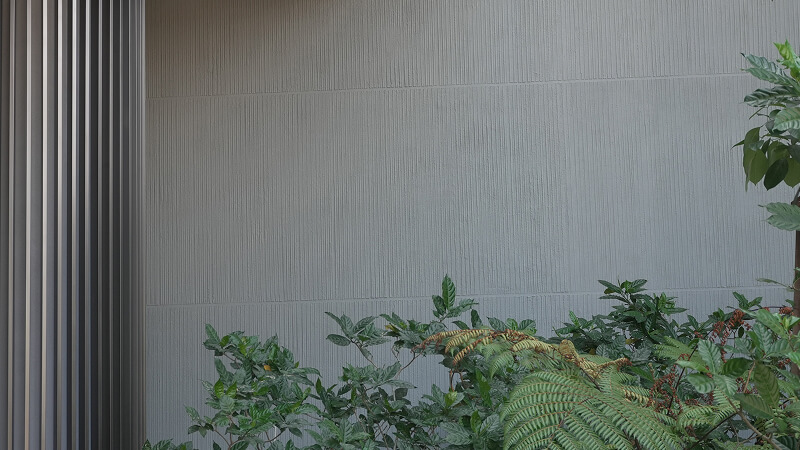
The finish is expressed through a fine vertical texture that works with the surrounding columns, darker architectural finishes and feature lighting. Rather than relying on colour alone, the wall contributes to the mood and identity of the lobby from the moment people enter.
Project details
Development: Jendela Residences - KLGCC Resort, Federal Territory of Kuala Lumpur
Project type: Lobby feature wall
Design direction: Stone-inspired textured finish
Product: Nippon Paint Texture Paint Momento® Sand Dune - Groove Texture
Key Takeaways
- Momento® Sand Dune - Groove texture paint was used to turn a plain lobby wall into a more distinctive feature.
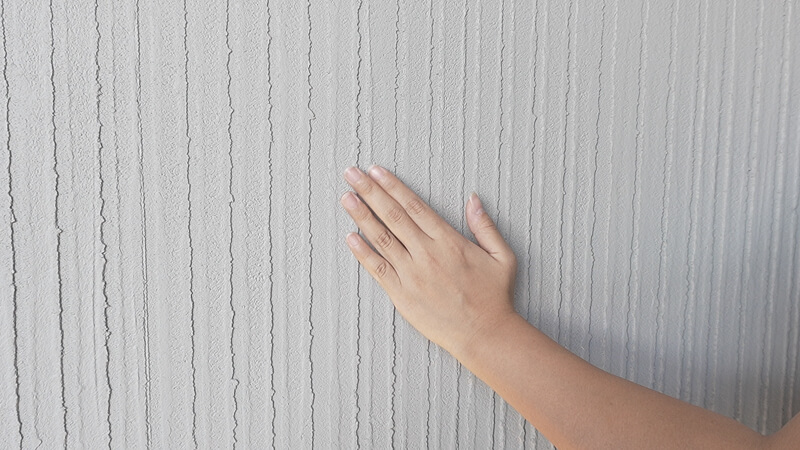
- The vertical wall texture creates a stone-inspired surface with greater depth and movement.
- Feature lighting helps reveal the texture through changing highlights and shadows.
- The wall works together with the surrounding columns, darker finishes and lobby interior rather than standing apart from them.
- The finish is created as part of a complete wall coating system using 5100 Wall Sealer, Momento® Sand Dune and Nippon Paint Weatherbond®.
- The project shows how feature wall design can influence the overall mood and first impression of a shared interior space.
Table of Contents
- How Feature Wall Design Shapes the Arrival Experience
- Why Texture Paint Works Well for Feature Wall Design
- How Momento® Sand Dune - Groove Creates a Stone-Inspired Wall Finish
- Why Vertical Wall Texture Works in a Residential Lobby
- The Momento® Sand Dune Wall Coating System
- Maintenance Considerations for a Textured Feature Wall
- The Value of Textured Feature Walls for Developers, Designers & Contractors
- Why Application Expertise Matters for a Textured Feature Wall
- FAQs
How Feature Wall Design Shapes the Arrival Experience
Feature wall design can shape the arrival experience by creating a clear visual focal point and helping the lobby feel more considered from the moment people enter.
The wall works with:
- the height and proportions of the lobby;
- adjacent columns;
- darker architectural finishes; and
- feature lighting.
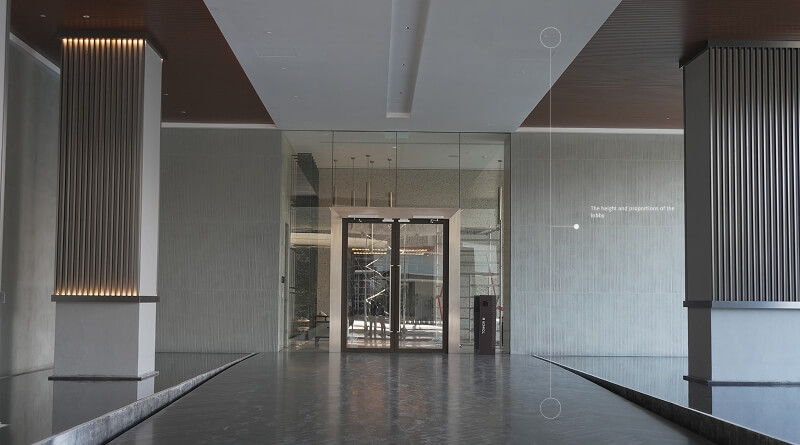
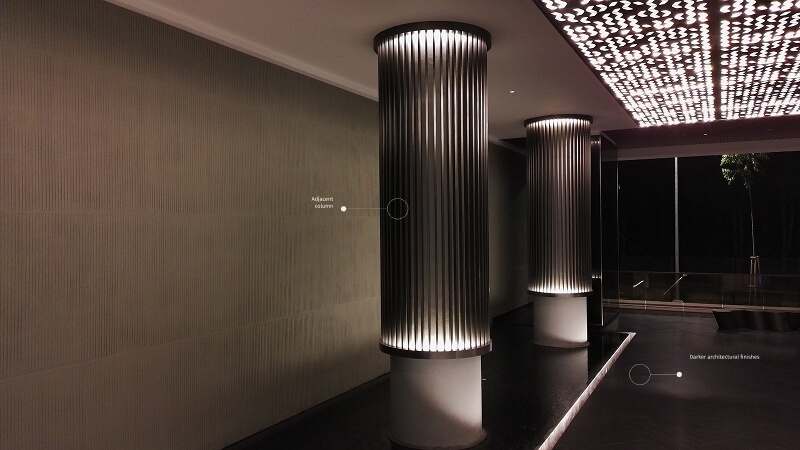
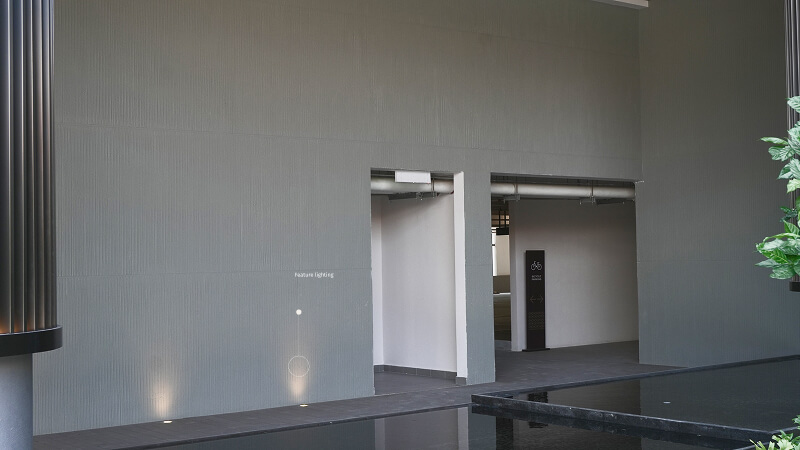
At Jendela Residences, the Momento® Sand Dune - Groove feature wall gives the arrival area a stronger visual identity through texture, vertical rhythm and its relationship with the surrounding interior.
Together, these elements help the wall become part of the overall spatial experience rather than a standalone decorative surface.
Why Texture Paint Works Well for Feature Wall Design
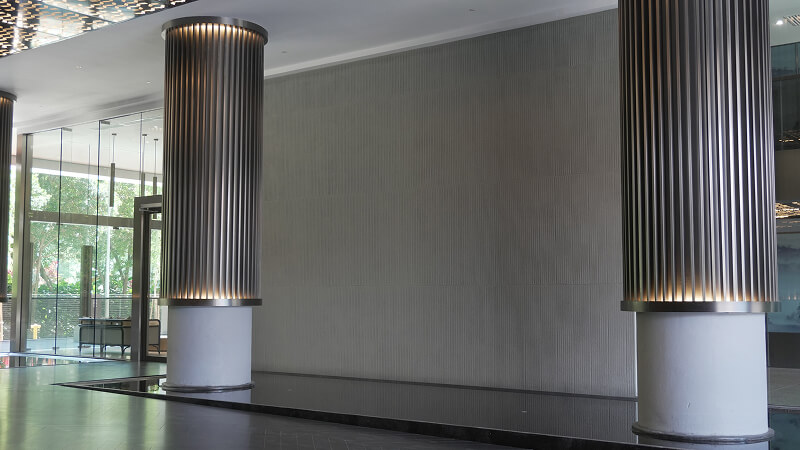
Texture paint works well for feature wall design because it creates visual distinction through surface depth, texture and material character without relying only on colour contrast.
The Momento® Sand Dune - Groove finish introduces:
- subtle surface variation;
- a more tactile appearance;
- a vertically expressed pattern;
- changing highlights and shadows; and
- a stone-inspired wall texture
This allows the wall to become a focal point without introducing an overly graphic or decorative treatment. The result is a feature that feels integrated with the lobby rather than separate from it.
How Momento® Sand Dune - Groove Creates a Stone-Inspired Wall Finish
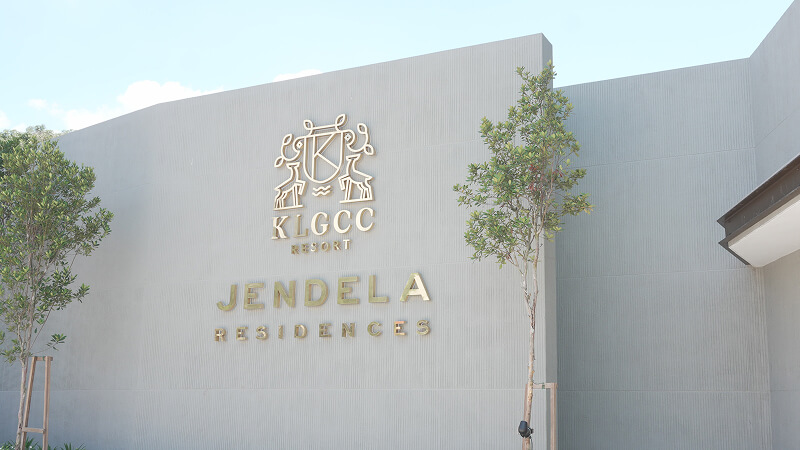
Momento® Sand Dune - Groove creates a stone-inspired wall finish by combining physical surface variation, colour and application technique.
This gives the feature wall greater visual interest through:
- texture;
- relief;
- shadow;
- movement; and
- material-like variation.
Designing Feature Walls With Nippon Paint Momento® Sand Dune Texture Paint
Unlike a conventional smooth wall paint, the textured coating changes the physical character of the surface itself.
The effect becomes especially noticeable under feature lighting, where the wall reveals more depth from different viewing angles.
For a lobby environment, this creates a more layered and tactile impression without depending on a separate cladding system to define the wall.
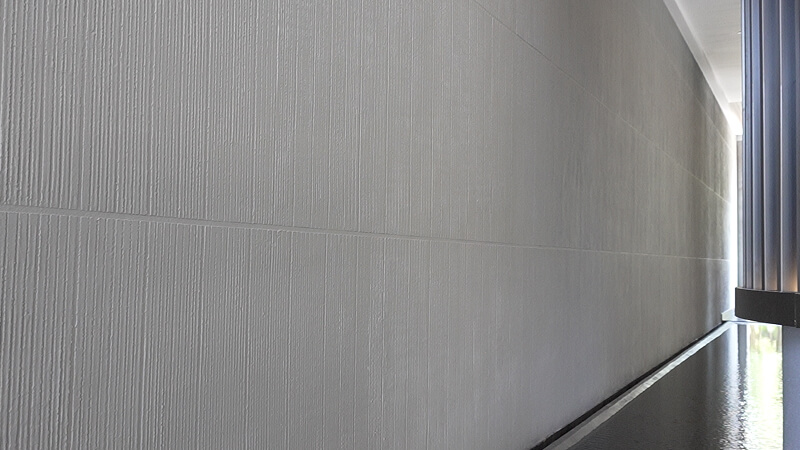
Why Vertical Wall Texture Works in a Residential Lobby
Vertical wall texture works well in a residential lobby because it can complement the height and architectural rhythm of the space while giving the feature wall stronger visual presence.
At Jendela Residences, the selected vertical texture works with the height of the lobby and the surrounding columns.
Rather than introducing a strong motif, the surface creates a quieter vertical rhythm across the wall. This helps the feature feel connected to the architecture around it.
The finish also responds to the lobby lighting. Raised areas catch more light while recessed areas create softer shadow, making the surface appear different depending on where it is viewed from.
The impact comes from the combination of texture, proportion and lighting, not from the coating alone.
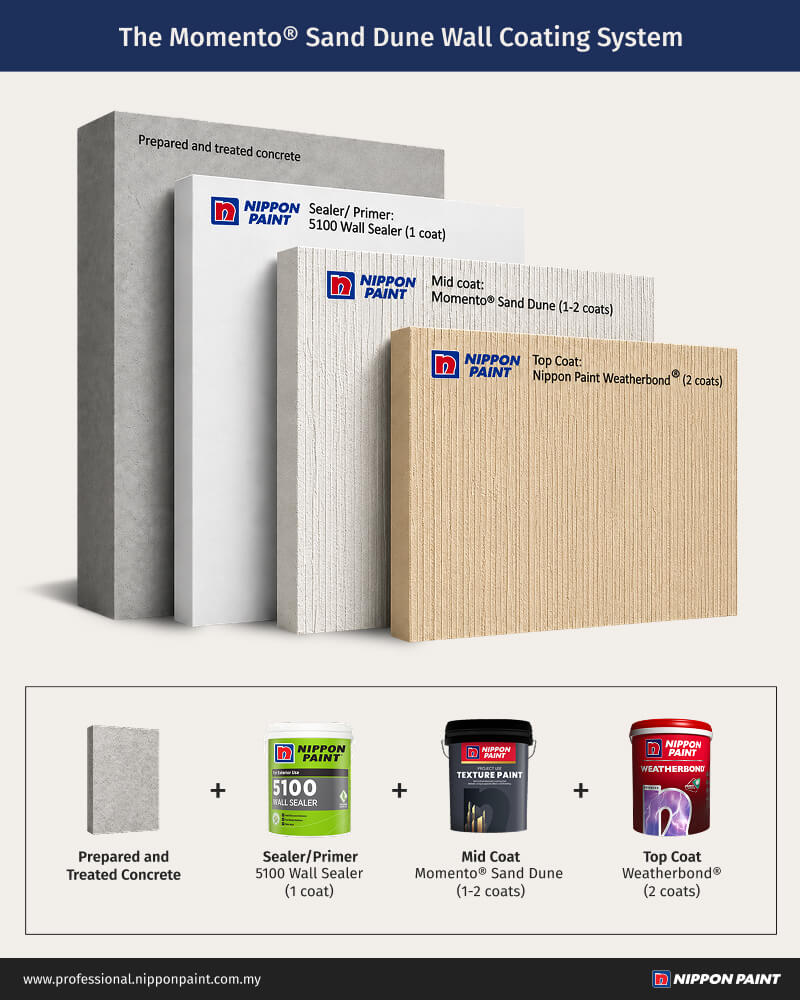
The Momento® Sand Dune Wall Coating System
The completed feature wall is created through a full wall coating system rather than the texture layer alone.
i. Sealer / Primer
Nippon Paint 5100 Wall Sealer — 1 coat
For preparing and sealing the treated substrate before applying subsequent coating layers.
ii. Mid Coat
Momento® Sand Dune - Groove — 1–2 coats
For creating the textured, stone-inspired surface finish.
iii. Top Coat
Nippon Paint Weatherbond® — 2 coats
For completing the final colour and protective finishing layer.
Maintenance Considerations for a Textured Feature Wall
The main maintenance considerations for a textured feature wall are matching the original texture, application direction, colour and surrounding surface during future repairs. Residential lobbies may also experience localised wear or minor surface damage over time.
With a coating-based textured finish, affected areas may be repairable through localised coating work, depending on the type and extent of the damage.
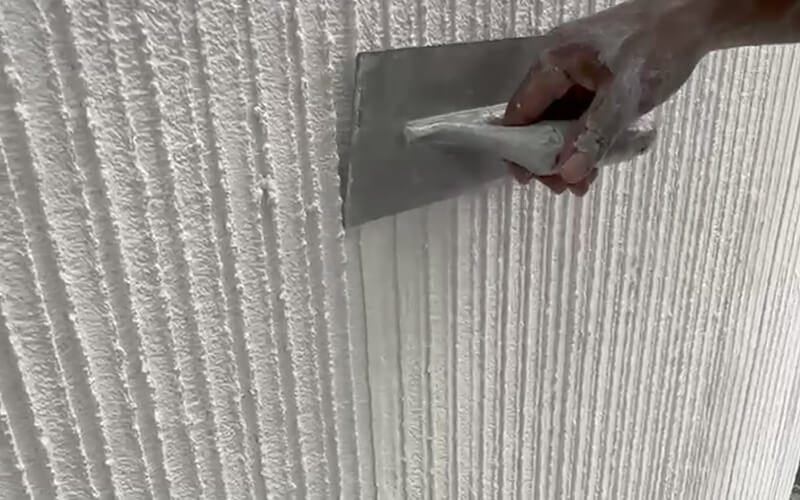
The ability to achieve a close visual match will depend on reproducing the original:
- texture;
- application direction;
- colour; and
- surrounding surface character.
For building owners and maintenance teams, keeping a record of the selected coating system and texture can therefore help future repair work remain more consistent with the original design.
The Value of Textured Feature Walls for Developers, Designers & Contractors
A textured feature wall can support project perception for developers, design flexibility for architects and interior designers, practical application for contractors and future maintenance planning for building management.
i. For Developers
The wall contributes to the perceived quality and identity of the lobby, helping the arrival space feel more considered rather than purely functional.
ii. For Architects and Interior Designers
Texture provides another way to shape a feature wall without relying solely on colour or separate decorative cladding.
The textured finish can be coordinated with proportions, lighting and surrounding materials as part of the overall design language.
iii. For Contractors
The decorative effect is created through a coating-based wall system, with the final texture formed through application technique rather than separate panel fabrication.
iv. For Building Management
The coating specification can be documented for future maintenance, including the original texture, colour and finishing system.
Why Application Expertise Matters for a Textured Feature Wall
Application expertise matters because the final texture, pattern direction and overall consistency depend on workmanship as well as the coating system.
At Jendela Residences, the application is supported by approved textured coating specialists, while the Nippon Paint project team works with developers, architects and interior designers to help translate the intended surface effect into the completed wall.
This coordination is particularly important for feature walls where texture is highly visible and forms part of the interior design.
Through Momento® Sand Dune - Groove, the wall becomes more than a background surface. It becomes part of the arrival experience — adding texture, material character and a stronger first impression from the moment people enter.
Planning a textured feature wall? Explore the different finishes available in Nippon Paint Momento® Sand Dune and find the texture that best suits your interior design vision.
With the right application expertise, each finish can bring its own character to your space.
FAQs
1. Can texture paint be used for a feature wall?
Yes. Texture paint is an effective way to create a feature wall, adding depth, dimension and visual interest beyond a conventional smooth painted finish. At Jendela Residences, Nippon Paint Momento® Sand Dune - Groove was used to achieve a vertically textured, stone-inspired finish that enhances the lobby's overall aesthetics.
2. What is a textured feature wall?
A textured feature wall uses physical surface variation to give one wall a stronger visual presence within a space. The texture can create depth, shadow and a more tactile appearance while helping the wall function as a focal point.
3. Can texture paint create a stone-inspired wall finish?
Yes. A stone-inspired wall finish can be created by combining the appropriate texture, colour and application technique. The final appearance depends on the selected texture design and how it is applied.
4. What is the difference between texture paint and normal wall paint?
Normal wall paint generally creates a relatively smooth surface while providing colour and protection. Texture paint also changes the physical profile of the wall, introducing raised and recessed areas that can create greater depth and material character.
5. What should be considered when designing a lobby feature wall?
When designing a lobby feature wall, key factors such as surrounding materials, lighting, wall proportions, viewing angles and the overall interior design concept should be carefully considered. A well-designed feature wall should complement the surrounding space, creating a cohesive and visually appealing environment while enhancing the lobby's architectural character.
6. Why is lighting important for a textured feature wall?
Lighting plays an important role in highlighting the depth, patterns and unique characteristics of a textured feature wall.
As light interacts with the textured surface, raised areas reflect light while recessed sections create subtle shadows, enhancing the three-dimensional effect.
Proper lighting can bring out the texture's natural beauty, creating a more dynamic and visually engaging feature wall from different viewing angles.
7. Can texture paint be used instead of decorative wall panels?
Texture paint can offer a different approach to feature wall design by creating the surface character directly through the coating application. Whether it is suitable as an alternative depends on the design intent, substrate, required appearance and project specification.
8. Can a textured feature wall be repaired?
Localised repair may be possible depending on the type and extent of the damage. Matching the original texture, colour and application direction is important when carrying out repair work.

5100 Wall Sealer is a styrene acrylic water-based wall sealer. It is specially formulated to protect the finishing coats against the effects of mild alkalinity and efflorescence. Product Features: • Good efflorescence resistance • Good for new walls and repainting • For exterior use • Environmental Product Declaration (EPD) Certified

Weatherbond is a premium pure acrylic-based exterior paint that is specially formulated with Quartz Technology which gives longer protection on exterior walls against harsh weather. The Quartz Technology results in a hard and tough paint film that provides excellent resistance to rainwater, UV radiation and dirt penetration. It is also more inert in nature hence better resistance toward alkalinity from the substrate and possible acidic impacts of the atmosphere. Additionally, Colour Care Technology allows a richer and long-lasting colour appearance. Product Features: • Quartz Technology provides tough and hard paint film • Excellent UV protection for longer-lasting colours • Excellent protection against acid rain that results in a longer-lasting paint film • Tougher resistance against alkaline and efflorescence from the substrate • Tougher resistance against dirt penetration from the environment • Excellent protection against fungus and algae • Reduce the temperature of the selected colour range with a high SRI value • 8 years of protection • Green choice product • Environmental Product Declaration (EPD) Certified

Momento® Sand Dune lets you recreate the beauty of natural textured finishes with distinctive sand-inspired effects that bring depth, character, and sophistication to any wall. Designed for both interior and exterior spaces, Momento Sand Dune transforms plain surfaces into stylish architectural statements with a refined natural look. Product Features: • Versatile textures and effects to create distinctive wall designs • Lightweight finish that enhances walls without adding heavy structural load • Beautiful colour and pattern variations to suit modern, natural, or luxury design styles • Water-based and low odour for a safer, more comfortable application experience • Cost-effective alternative to real stone while achieving a premium textured look