



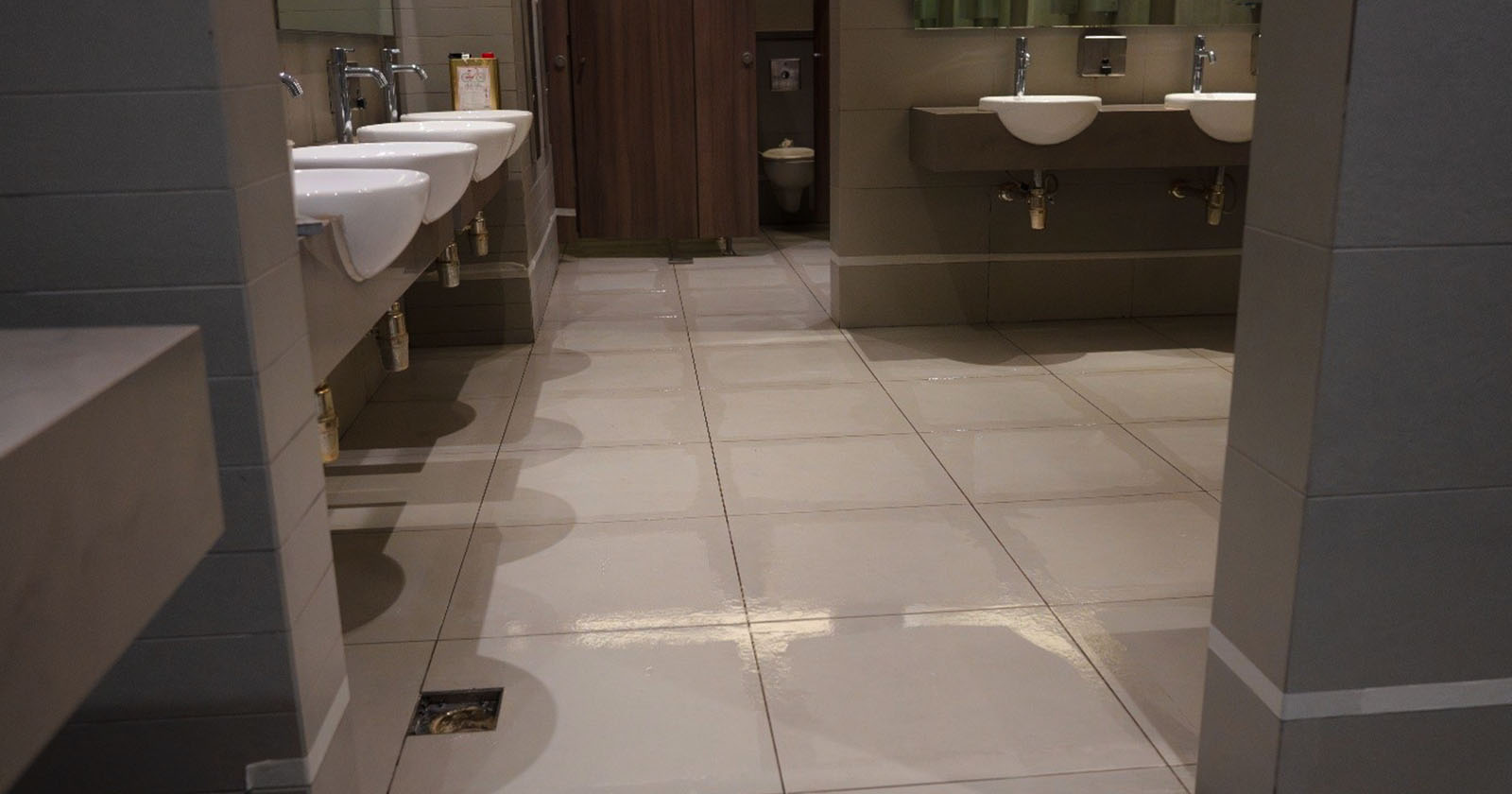
Visible ponding and water seepage in the exhibition center's high-traffic wet areas before treatment
How Tile & Concrete Waterproofing Solved Exhibition Centre Leaks Without Hacking Existing Tiles
Water leakage in a large exhibition centre is more than a maintenance issue. It can interrupt operations, affect user experience, damage ceilings, and create a poor impression for visitors. In high-traffic venues, even a small waterproofing failure can quickly turn into a costly operational problem.
At an exhibition centre, leakage had begun affecting key wet areas, including toilets, suraus, and ceilings below. The challenge was not only to stop the leaks, but to do so without shutting down operations or removing existing tiles. For a busy commercial venue, conventional repair methods would have caused significant disruption, extended downtime, and unnecessary cost.
Why waterproofing failures are a major issue in large facilities
In large commercial buildings, waterproofing failures between floors can be difficult to manage. Leaks often appear far from the actual source, making diagnosis and repair more complex. When the affected areas include public toilets, ablution areas, and ceilings, the consequences go beyond surface damage.
At the exhibition centre, inspection found several key concerns. Leakage from wet areas was affecting the spaces below, visible stains were forming on ceilings, and the ceiling height made repairs more difficult and costly. More importantly, the common approach of removing tiles and redoing the waterproofing underneath would have been highly disruptive for an operating exhibition venue.
This is a common issue in commercial buildings, convention centres, malls, and mixed-use facilities. Traditional hacking and replacement may solve the problem, but it also introduces dust, debris, noise, longer repair periods, and disruption to daily business.
The limitation of conventional waterproofing repair
For many facility owners and managers, the first thought is often to remove the tiles, repair the substrate, and rebuild the wet area system. While this is sometimes necessary, it is not always the most practical solution.
In an active venue like this exhibition centre, conventional re-waterproofing would have created several challenges:
- business disruption during repair works
- longer downtime for affected areas
- higher labour and replacement costs
- noise, mess, and inconvenience for users
- greater difficulty when accessing ceiling repair zones
That is why the project required a waterproofing solution that could be applied faster, with less disruption, while still delivering long-term protection.
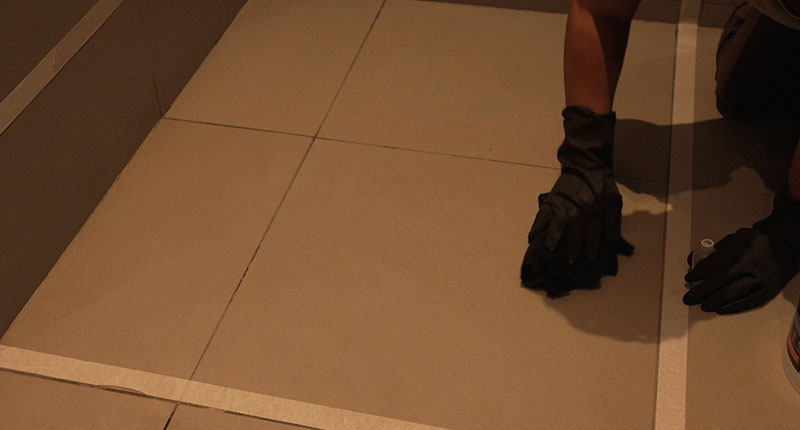
Precision preparation: Thoroughly cleaning the existing tiles to ensure maximum adhesion for the waterproofing membrane
The waterproofing solution applied over existing tiles
For this project, the recommended system was NippoSEAL Spartic Clear, a waterproofing solution applied directly over the existing tiled surface. Instead of removing the tiles, the system was designed to form a protective waterproofing layer above them, helping seal the area while maintaining the existing finish.
Before the full application, a mock-up test was conducted at the exhibition centre in an exposed area for four months. This trial was important to assess real-use performance, including peeling resistance, slipperiness, wear and tear, and overall membrane condition. After the results performed well, the client approved the system for a larger application area of more than 300 square metres.
This step is especially important from a technical and credibility standpoint. It shows that the system was not chosen based on theory alone, but validated under actual site conditions before wider implementation.
How the system was applied
The waterproofing process was carried out in a structured sequence to ensure proper bonding, durability, and slip resistance.
The tiled surface was first cleaned thoroughly using a cleaning agent to remove contaminants and prepare the substrate for adhesion. Surface preparation is critical in any waterproofing system, especially when applying directly over existing finishes.
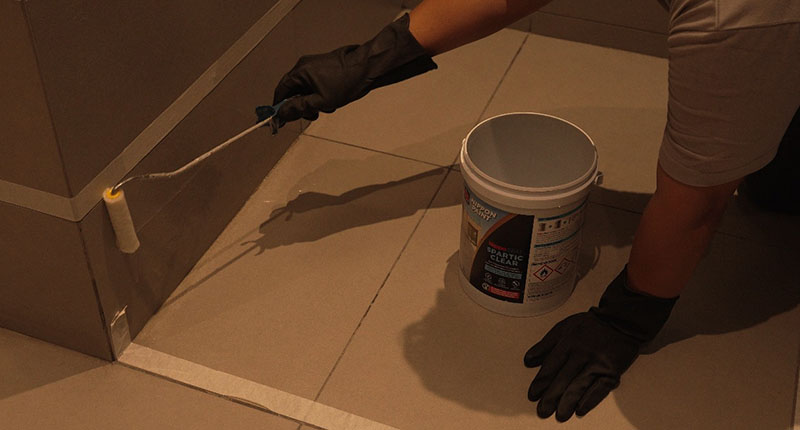
Applying the initial layer of NippoSEAL Spartic Clear integrated with anti-slip powder for enhanced safety
Next, the first coat of NippoSEAL Spartic Clear mixed with anti-slip powder was applied directly on top of the tiles. This helped establish the initial bonding layer while contributing to surface safety.
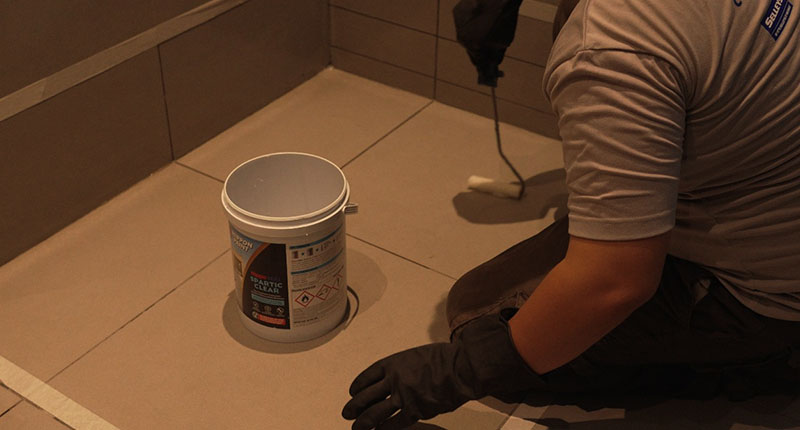
Strengthening the shield: A second coat is applied to complete the waterproof seal and fortify the finish
A second coat of the same system, again with anti-slip powder, was then applied to complete the waterproofing layer and strengthen the overall finish. The completed system provided a durable, slip-resistant, and sealed surface suitable for the wet area environment.
One of the biggest advantages of this approach was that it was completed without hacking the existing tiles. That meant no hammering, no dust, no debris, and far less disruption compared to conventional waterproofing replacement methods.
The outcome: leak protection with less downtime
By applying the waterproofing system directly over the existing tiles, the exhibition centre was able to address the leak issue without undergoing major demolition or business interruption.
The solution helped deliver several practical benefits:
No inter-floor leakage
The wet areas were sealed without the need to remove the tiled finish, reducing the source of leakage affecting the spaces below.
Minimal disruption to operations
Because the repair avoided hacking works, the project was far more manageable for an active exhibition centre.
Safer user experience
The anti-slip component added surface grip, which is especially important in wet areas such as toilets and ablution spaces.
Cost efficiency
Avoiding full tile removal helped reduce the overall disruption, labour intensity, and downtime costs commonly associated with traditional repairs.
Longer-term protection
The system created an elastic, tough, chemical-resistant, anti-slip, and weathering-resistant finish designed to perform in demanding environments.
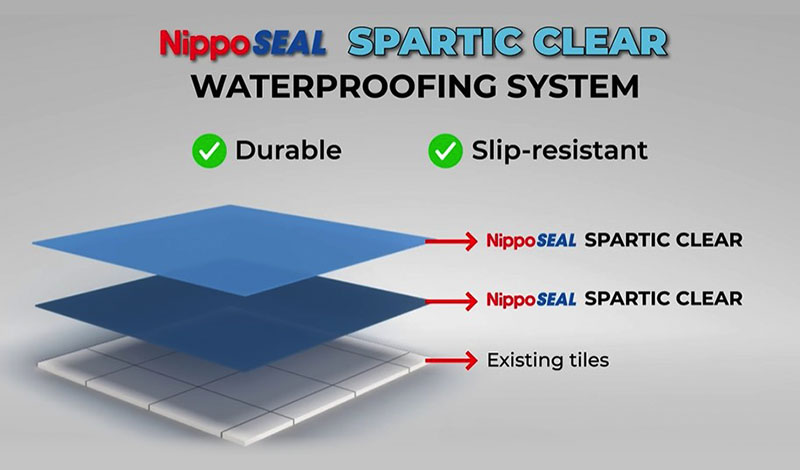
A breakdown of the NippoSEAL Spartic Clear system: Dual-layered protection applied directly over existing tiles
Why this case matters for property owners and facility managers
This project reflects a broader shift in how waterproofing problems are approached in commercial and institutional buildings. Today, building owners are not only looking for a technical fix. They are also looking for systems that reduce interruption, preserve existing finishes where possible, and maintain building usability.
That is why waterproofing solutions applied over tiles are gaining attention for specific use cases. When the substrate condition is suitable and the right system is selected, they can offer a practical alternative to full demolition-based repair.
For facility managers, this means the decision is no longer just about stopping a leak. It is about choosing a system that balances performance, cost, speed, safety, and disruption control.
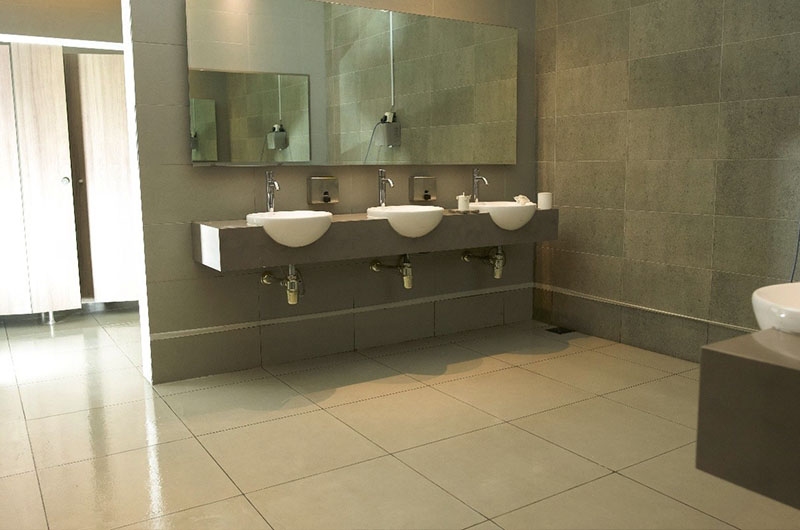
A fully waterproofed, slip-resistant restroom restored without a single tile being hacked
Nippon Paint’s expert approach to waterproofing solutions
A strong waterproofing outcome depends on more than just product selection. Site diagnosis, system compatibility, mock-up testing, application quality, and workmanship all play a role in long-term performance.
In this project, the application was carried out by approved waterproofing specialists, helping ensure that the installation met the required workmanship standards. The system is also backed by test reports, giving clients greater confidence in the solution selected for the site.
This expert-led approach is what helps move waterproofing from a reactive repair job to a more reliable and credible building solution.
Conclusion
For large facilities like exhibition centres, waterproofing failure can quickly affect operations, maintenance cost, and public image. But not every leak problem needs to be solved through hacking and replacement.
This case shows how a properly tested waterproofing system applied directly over existing tiles can help solve inter-floor leakage with less disruption, less mess, and better continuity for the building’s daily use. For commercial buildings seeking a faster and more practical repair approach, this type of solution offers a strong alternative worth considering.
If your building is facing leakage issues in wet areas, ceilings, or inter-floor spaces, choosing the right system early can help prevent more extensive damage and avoid unnecessary repair disruption.
FAQ
Can waterproofing be applied over existing tiles?
Yes, in suitable conditions, certain waterproofing systems can be applied directly over existing tiles. This avoids hacking and helps reduce disruption, provided the surface is properly prepared and the correct system is selected.
Is hacking always necessary for wet area waterproofing repair?
No. Some waterproofing failures can be addressed without tile removal, especially when a compatible over-tile waterproofing system is suitable for the site condition and performance requirements.
What causes inter-floor leakage in commercial buildings?
Inter-floor leakage often happens when waterproofing in wet areas such as toilets or ablution areas fails over time, allowing water to seep through the slab and affect ceilings or spaces below.
What are the benefits of waterproofing over tiles?
The key benefits include less disruption, faster repair, no debris from hacking, reduced downtime, and preservation of the existing tiled finish.
Is over-tile waterproofing suitable for commercial buildings?
Yes, it can be suitable for selected commercial applications, especially where operations must continue and conventional tile removal would be too disruptive.
Why is anti-slip performance important in wet area waterproofing?
In wet areas, surface safety is important. A waterproofing system with anti-slip properties can help reduce slip risk while still providing sealing performance.
Contact Nippon Paint for your flooring solution needs.
To learn more, visit https://professional.nipponpaint.com.my/products/nipposeal-spartic-clear or contact our Customer Careline at 1-800-88-2663 or email us at customercare@nipponpaint.com.my
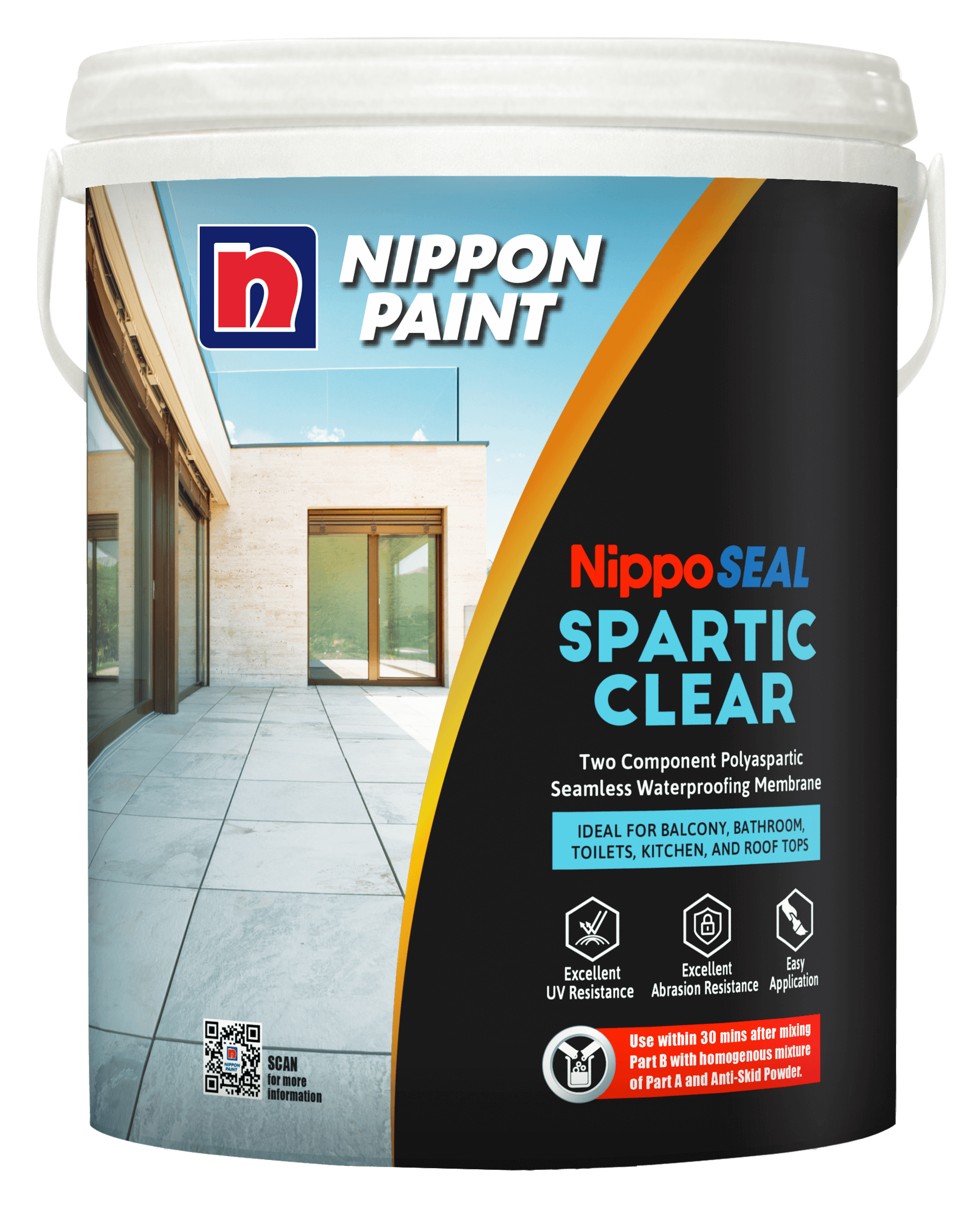
NippoSEAL SPARTIC CLEAR is a two component, user friendly, high solid liquid applied pure polyaspartic seamless waterproofing membrane. Suitable for various types of tiles and concrete floor of wet area, including bathroom, toilets, kitchen, balcony and roof top.