



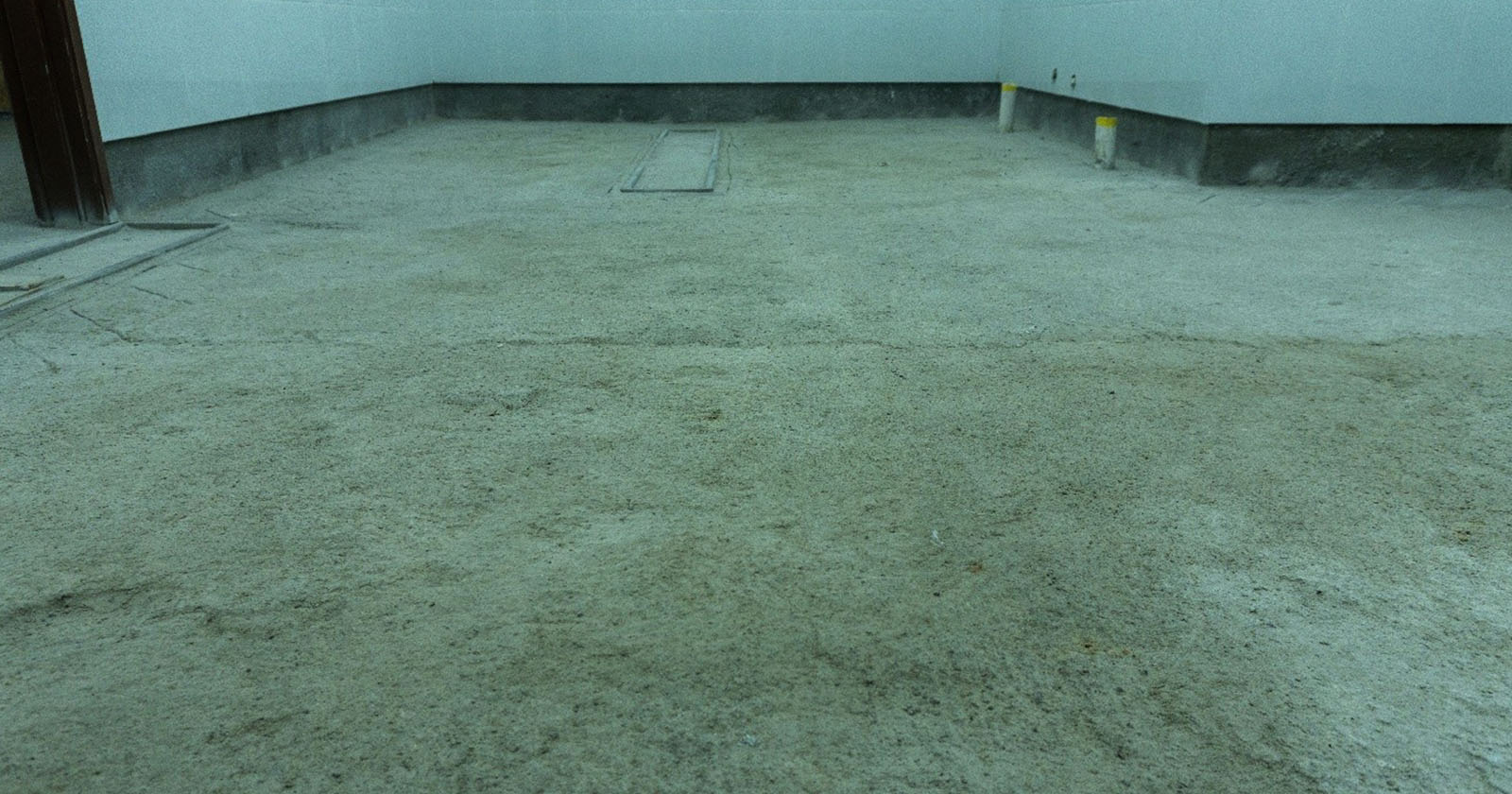
The before state of the hospital kitchen flooring
Why Hospital Kitchens Need Food Safe Flooring Systems
In a hospital kitchen, hygiene is not optional. It is part of the operational standard. Floors in these environments are exposed every day to spills, steam, hot oil, regular washing, and fast-paced kitchen movement. If the flooring system cannot withstand those conditions, the risk is not just surface wear. It becomes a hygiene, safety, and compliance issue. That is why hospital kitchens need a flooring system that is seamless, easy to clean, durable, and designed specifically for food-safe environments.
At this hospital kitchen project, the flooring upgrade was driven by exactly that need. The goal was to move toward a safer, more hygienic, and easier-to-maintain flooring system that could support daily kitchen demands while helping the facility meet strict HACCP hygiene standards. Rather than treating flooring as a basic surface finish, the project approached it as an essential part of food preparation safety and operational performance.
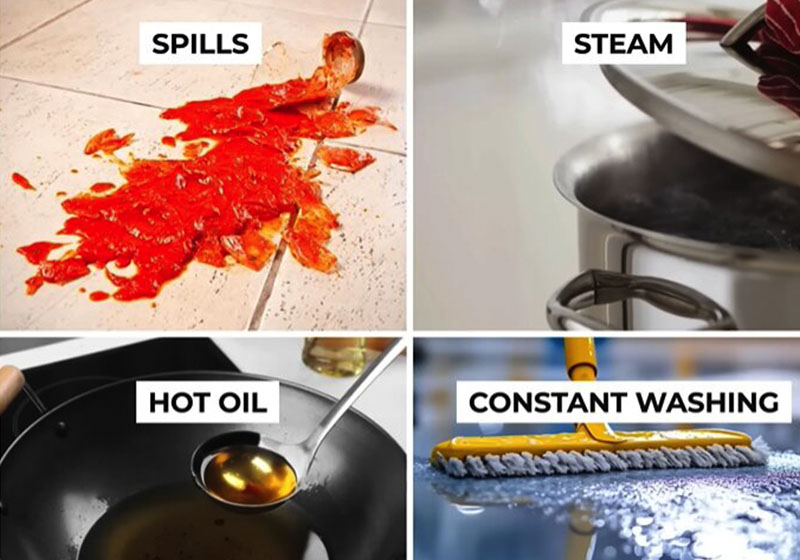
The operational challenges in industrial kitchens: spills, steam, hot oil, and constant washing
Why flooring matters so much in hospital kitchens
Hospital kitchens operate under stricter expectations than many standard commercial kitchens. Food is prepared in an environment where cleanliness, contamination control, and consistency matter every day. The floor plays a major role in supporting that environment.
According to your script, the existing challenge was straightforward: hospital kitchen floors face spills, steam, hot oil, and constant washing. If the floor cannot handle those conditions properly, bacteria, mould, and contaminants can begin to build up. Without a seamless and non-porous surface, keeping the kitchen safe, clean, and compliant becomes much harder over time.
This is exactly why food-safe flooring systems matter. In sensitive environments, the floor should not create unnecessary joints, porosity, or weak points that complicate cleaning or hygiene management.
Why HACCP-compliant flooring is important
HACCP standards are a critical reference point in food-related environments, and your script clearly positions the flooring upgrade around this hygiene requirement. The point is not just that a floor should look clean. It must support a cleaner and more controlled environment consistently, day after day. In a hospital kitchen, that means a flooring system that is suitable for repeated washing, daily wear, and hygiene-sensitive operations.
A seamless flooring system helps support this by reducing areas where dirt, moisture, or contaminants may accumulate. Compared with more porous or jointed surfaces, a properly installed seamless floor is easier to clean and maintain, which makes it more suitable for demanding kitchen conditions. That is one of the biggest reasons food-safe flooring is often preferred in hospitals, food plants, pharmaceutical areas, and clean environments.
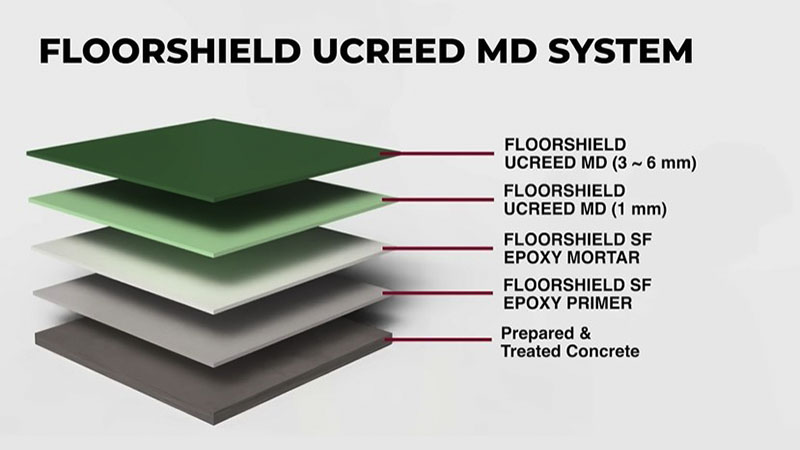
The multi-layered system of FloorShield UCREED MD
The selected solution: FloorShield UCREED MD
To meet these requirements, the hospital selected Nippon Paint FloorShield UCREED MD, described in the script as a medium-duty polyurethane-cement flooring system designed for food-safe environments. The system is presented as HACCP certified and built to deliver fast and durable system build-up, excellent impact resistance, abrasion resistance, and excellent chemical resistance.
This makes it well suited for kitchens where the floor must handle more than simple foot traffic. In real use, hospital kitchen flooring needs to tolerate thermal stress, frequent cleaning, operational movement, and contact with substances that may challenge an ordinary floor finish. A polyurethane-cement system is valuable in this context because it is designed for tougher service conditions and hygiene-focused applications.
How the hospital kitchen flooring system was built
One of the strengths of this project is that it shows clearly that food-safe flooring is not a single coat. It is a system. Each layer contributes to performance, hygiene, and long-term durability.
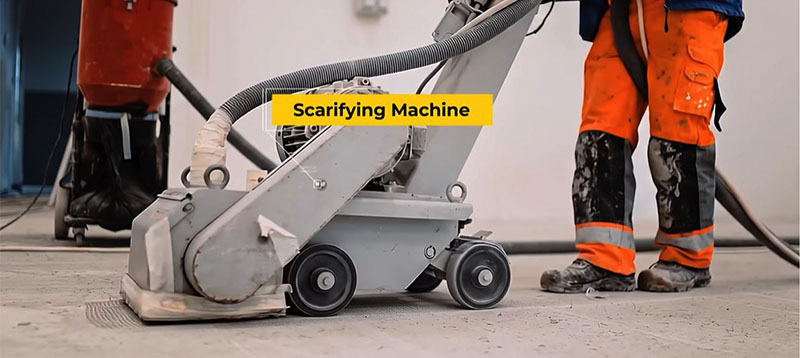
A worker using a scarifying machine on the floor
Surface preparation
The process began with surface preparation using a scarifying machine to clean, roughen, and open up the surface. This is essential because proper preparation improves grip and supports long-term durability of the new floor system. In flooring, poor preparation often leads to poor performance, so this first step is critical.
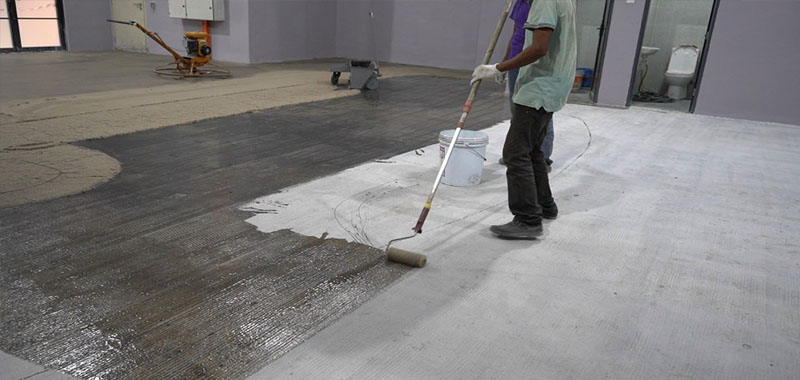
The application of FloorShield SF Epoxy Primer using a roller
Step 1: FloorShield SF Epoxy Primer
The first product layer was NIPPON PAINT FLOORSHIELD SF Epoxy Primer, used to create strong adhesion between the concrete base and the mortar layer. Good adhesion is a foundation requirement in any flooring build-up, especially in demanding service environments like hospital kitchens.
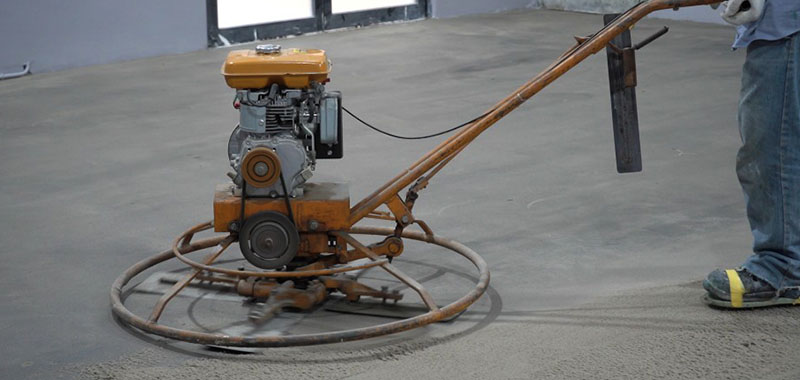
The leveling of FloorShield SF Epoxy Mortar using a power trowel
Step 2: FloorShield SF Epoxy Mortar
Next came NIPPON PAINT FLOORSHIELD SF Epoxy Mortar, applied to strengthen the surface and level out minor uneven areas. The script describes it as a high-strength, shrink-free underlayment designed for heavy-duty use, offering excellent impact resistance and permanent moisture protection. This matters because a durable, stable underlayer helps the overall system perform better over time.
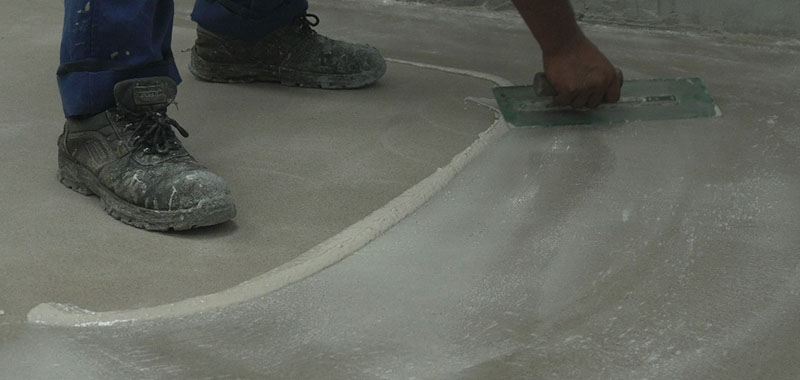
The application of the UCREED MD scratch coat
Step 3: UCREED MD Scratch Coat
After that, a 1mm scratch coat of Nippon Paint FloorShield UCREED MD was applied. This layer helps grip onto the surface and smooth out small uneven spots. It acts as an important transitional layer before the final finish is installed.
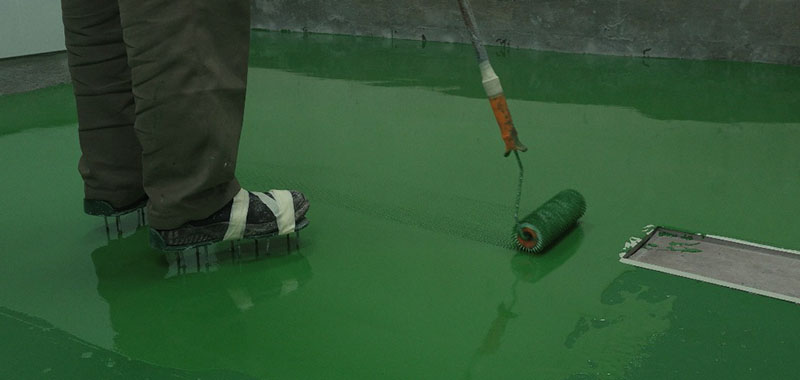
The application of the main Nippon Paint FloorShield UCREED MD finishing layer
Step 4: UCREED MD Finish
The final layer was the main Nippon Paint FloorShield UCREED MD finishing layer, applied at 3mm to 6mm. According to the script, this creates a seamless, durable, textured surface with a matt, smooth finish, making it suitable for wet and fast-paced kitchen conditions. This final build-up is what gives the kitchen its hygienic, durable, and practical working surface.
Why this flooring system works for hospital kitchens
This system works because it addresses the actual conditions hospital kitchens face every day. It is not just decorative flooring. It is a hygiene-supporting, performance-driven flooring system built for operational use.
The completed floor offers several practical advantages:
A seamless surface for easier cleaning
The seamless build helps support routine cleaning and hygiene control, which is important in food preparation areas.
Support for HACCP hygiene standards
The flooring was selected specifically because the kitchen needed a system aligned with strict HACCP hygiene expectations.
Resistance to impact, abrasion, and chemicals
These properties matter in kitchens where floors face repeated cleaning, movement, spills, and operational wear.
Suitability for wet kitchen conditions
The final finish was designed for wet and fast-paced conditions, which makes it relevant to hospital kitchen operations.
Improved safety and operational efficiency
The final result, as described in the script, is a safer, cleaner, and more efficient kitchen environment with easier cleaning and reduced downtime.
Why food-safe flooring should be seen as an operational decision
One important takeaway from this project is that food-safe flooring is not only about compliance. It is also about operational reliability. When a hospital kitchen floor is easier to clean, more durable, and better suited to wet and demanding conditions, it helps the kitchen function more consistently.
That matters because flooring issues in a hospital kitchen can affect far more than maintenance schedules. They can influence hygiene performance, staff efficiency, cleaning routines, and long-term lifecycle cost. A proper flooring system helps reduce those risks by giving the facility a more robust foundation for daily operations.
Why Nippon Paint’s expert approach matters
Nippon Paint’s role in this project is not just supplying a product, but specifying a complete flooring system for a hygiene-critical environment. The script shows a structured build-up from preparation to primer, mortar, scratch coat, and final finish. That system-based approach is what gives the floor its long-term value.
For hospital kitchens and similar food-safe environments, this matters. A properly specified system gives decision-makers more confidence that the floor is designed for real operating conditions, not just short-term appearance.
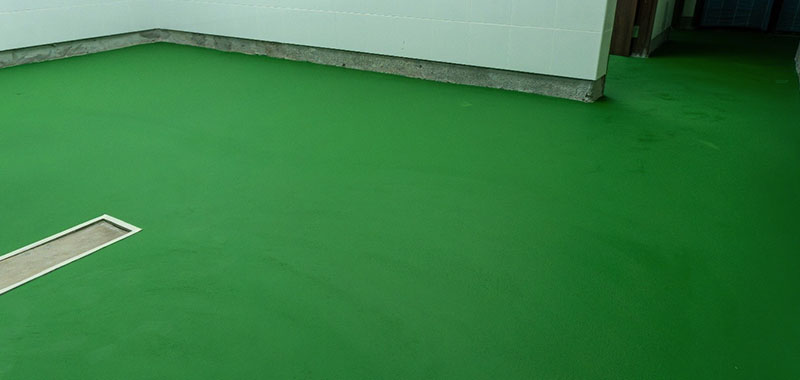
The completed flooring using Nippon Paint FloorShield UCREED MD
Conclusion
Hospital kitchens need food-safe flooring systems because hygiene, safety, and compliance depend on more than cleaning alone. The floor itself must support those goals. In this project, the hospital selected a seamless polyurethane-cement flooring system that is HACCP certified, durable, chemical resistant, abrasion resistant, and suitable for wet kitchen use. The result was a safer, cleaner, and more efficient kitchen environment built for daily demands.
For hospitals, healthcare kitchens, food plants, and other hygiene-sensitive facilities, the right flooring system is not a finishing upgrade. It is part of the operational standard.
FAQ
Why do hospital kitchens need food-safe flooring?
Hospital kitchens need food-safe flooring because they operate in hygiene-critical environments where floors must withstand spills, steam, hot oil, washing, and daily cleaning while helping maintain cleanliness and compliance.
What makes a flooring system food safe?
A food-safe flooring system is typically designed to be seamless, durable, easier to clean, and suitable for hygiene-sensitive environments. In this case, the selected system was also described as HACCP certified.
Why is seamless flooring important in hospital kitchens?
Seamless flooring helps reduce joints and surface interruptions, making the floor easier to clean and better suited for maintaining hygienic conditions in food preparation areas.
What is Nippon Paint FloorShield UCREED MD used for?
Nippon Paint FloorShield UCREED MD is a medium-duty polyurethane-cement flooring system designed for food-safe environments such as hospital kitchens and other hygiene-sensitive areas.
Is polyurethane-cement flooring suitable for wet kitchen environments?
Yes. In this project, the Nippon Paint FloorShield UCREED MD finishing layer was described as suitable for wet and fast-paced kitchen conditions.
What benefits does this hospital kitchen flooring system provide?
The system provides a seamless, hygienic, durable surface with impact resistance, abrasion resistance, chemical resistance, easier cleaning, reduced downtime, and support for HACCP hygiene requirements.
Contact Nippon Paint for your flooring solution needs.
To learn more, visit https://professional.nipponpaint.com.my/flooring-solutions/industrial-flooring or contact our Customer Careline at 1-800-88-2663 or email us at customercare@nipponpaint.com.my
FloorShield Solvent Free Epoxy Mortar is a 3-component shrinkage-free 100% solid underlayment that provides impact resistance in heavy-duty usages and permanent anti-osmosis system that outperforms all the temporary cementitious epoxy moisture barrier (TMB). It is an ideal system in heavy-duty high-impact production and warehouse floors especially in the lowest basement car parks such as Basement 6~7 where the hydrostatic pressure is greatest where conventional cementitious epoxy moisture barrier fails. Product Features: • Solvent-free thus no solvent smell • Impact resistance • 100% Solid thus zero shrinkage • Reduces moisture to < 2% wt /wt as early as 15 hours for over-coating • Excellent adhesion for overpayment • Independent of air-drift or environment moisture
FLOORSHIELD SF EPOXY PRIMER is a two-component solvent free low viscosity 100% solid epoxy primer modified for excellent substrate wetting and penetration. It is to be used on prepared concrete to seal the porosity of concrete and provide penetration to enhance adhesion to prepare for polymer overlay Product Features: • Solvent-free thus no solvent smell • Low viscosity for penetration • Excellent wetting of substrate • Excellent adhesion for overlayment
FloorShield Ucreed MD is a 3-component, seamless, flow-applied self-smoothing, water-based polyurethane modified concrete flooring topping system. It is designed in the thickness range from 3mm to 6mm for medium-duty industrial application and resurfacing flooring application at matt and smooth finish. After fully cured, it exhibits high physical and mechanical properties such as high impact resistance, good adhesion, a wide spectrum of chemical resistance, withstands abrasive wear, and thermal shock resistance. Product Features: • Excellent chemical resistance • High impact resistance • Excellent wear resistance and durable • High-temperature resistance up to 90°C • Easy clean and maintenance • Seamless and hygienic • Resists micro-organism (bacterial, fungi, mold, mildew) growth • User-friendly and low VOC • Good adhesion • Fast application and rapid return to service access • HACCP Certified